I want to tell you something I don’t talk about very often.
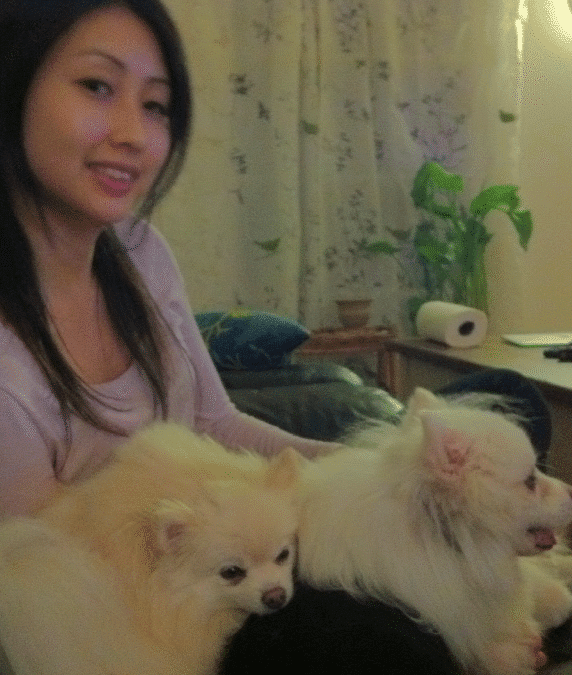
There was a time in my twenties when I couldn’t leave my apartment. Not wouldn’t — couldn’t. Depression had settled into my bones so deeply that opening the curtains felt like an act of courage I didn’t have. The thought of facing the world made me want to disappear.
But I had dogs. And they needed to be walked.
So I got up. I put on shoes. I stepped outside. And I felt the sun on my face.
My dogs didn’t cure my depression. But they kept me moving long enough to heal.
I shared this story recently on my podcast with Dr. David Haworth, and I want to share it with you now — because I know some of you have lived a version of this. Maybe your pet was the only reason you got out of bed during a hard season. Maybe they were the only warm body that sat with you while you cried on the floor. Maybe they didn’t judge you when the rest of the world felt impossible.
If that’s you, I see you. And this letter is for you.
Here’s something that stopped me in my tracks when I first heard it: when a spouse dies, the surviving partner has a 50% chance of dying within a year. But if there’s a dog in the house, that mortality rate is cut in half.
You are twice as likely to survive grief if you have a dog.
Not because dogs are magic (well, maybe a little). But because they force us to get up. To hold a routine. To remember that life still needs us — even when we don’t want it to. They tether us to the world with the simplest things: a leash, a walk, a bowl that needs filling, a nose pressed into our palm at 6 AM whether we’re ready or not.
That’s not small. That’s everything.
David and I talked about something else that I think every pet parent carries but rarely says out loud: guilt.
The guilt of leaving them alone when you go to work. The guilt of wondering if you’re doing enough. The guilt of that one time you got impatient, or the day you were too tired to take the long walk, or the choice you made at the end that you’ll replay in your mind for years.
Here’s what I want you to hear — really hear: guilt is not a sign that you’re failing. It’s a sign that you love fiercely. You cannot feel that kind of guilt without caring that deeply. And the fact that you worry about being a good enough pet parent? That is what makes you a good one.
Give yourself the same grace you give your pet when they knock over the water bowl for the third time today.
We also talked about something that sits at the very heart of why I built Integrative Pet Wellness Center — and why I get up every morning and do what I do.
David told me about his golden retriever, Bridger. A heart dog. The kind of dog who could walk into a crowded hospital room and somehow know exactly who needed him most — not always the patient in the bed, but sometimes the quiet grandfather in the corner who hadn’t spoken in two days. Bridger would walk over, put his head on that person’s lap, and the tears would come.
That’s the bond we’re talking about. Not the cute Instagram version of it — the real, three-dimensional, sometimes-messy, sometimes-painful, always-worth-it version.
David said something that I keep thinking about: “The human-animal bond is not only a positive thing. It’s three-dimensional, like everything else in life.” There’s the joy, yes. But there’s also the anxiety of not knowing if you’re getting it right. The grief that sneaks up years later. The impossible math of loving someone whose life is so much shorter than yours.
And I think that’s exactly why this bond changes us. Because it asks us to love without a safety net. To show up fully, knowing it will end. To be present with another living being who doesn’t need us to be perfect — just there.
I want to close with why this matters to me — not just as a veterinarian, but as a person who owes her life to the dogs who got her through those dark apartment days.
When I started IPWC, I didn’t just want to treat sick pets. I wanted to honor the bond between you and your animal. The bond that saves lives — yours and theirs. I wanted to create a space where pet parents could come for hope when they’d been told there was none. Where your pet could be seen as a whole being — gut, mind, spirit, personality, history — not just a set of symptoms to manage.
Every time we run a microbiome test, every time we do a fecal transplant or an acupuncture session or sit with you to talk through a tough diagnosis, we’re not just practicing medicine. We’re honoring the relationship that brought you through our doors in the first place. The one that gets you out of bed. The one that makes your house a home. The one that — on the hardest days — keeps you alive.
That’s what this work is about. That’s what it’s always been about.
And if you ever forget that, your pet will remind you. Probably at 6 AM. Probably with their nose in your face.
They’re good like that. 🐾
If this letter resonated with you, I’d love for you to listen to my full conversation with Dr. David Haworth on the My Dog Is Better Than Your Dog podcast. We go deep into the human-animal bond, the Golden Retriever Lifetime Study, what the microbiome means for longevity — and yes, we both cried a little.
And if someone in your life is grieving a pet, or loving one so hard it scares them a little — send them this. Sometimes knowing you’re not alone in how deeply you feel is the most healing thing of all.
With so much love, Dr. Lily 💜