You see, I will be honest about where I started with this medicine. Years ago, when I first heard the words “fecal transplantation,” I did not believe it was a real treatment. I remember thinking someone was pulling my leg. Take the microbiome of a healthy dog and use it to restore a sick one? It sounded wild.
It is not wild. It is one of the fastest moving frontiers in veterinary medicine, and I have spent this month living inside the evidence for it.
On October 15th, I will be in Reno teaching microbiome medicine to a room full of veterinarians at the Wild West Vet Show. I am also preparing a lecture for Dr. Kendra Pope’s course for veterinary integrative oncology, on why the microbiome matters so deeply for cancer patients. And as I rebuilt these lectures, something stopped me.
Last year, when I taught this material, many of the studies were still underway. The data simply did not exist yet.
One year later, it does. The field has moved that fast. And inside our own practice, the picture has grown just as quickly, we have now tracked thousands of treatments, with hundreds of microbiome tests and the clinical responses to match them. We are collaborating with researchers to look at the data for publishing. Our recommendations are not hopeful guesses. They are backed by what we have watched happen, in our own patients, again and again.
And across all of it, the published studies, the conference data, our own charts, one pattern keeps emerging.
The earlier we start, the better the outcome.
Here is the part I find myself sitting with. When we restore a microbiome early, we are sometimes preventing problems far more serious than the one we came in for. And we may never know it, because those problems simply never arrive. No crisis, no diagnosis, no hard conversation in a quiet room.
The most important graduations are the ones that never need to happen.
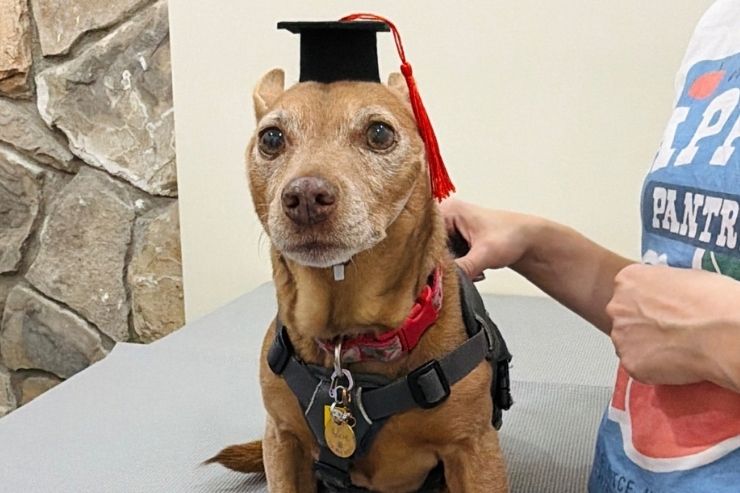
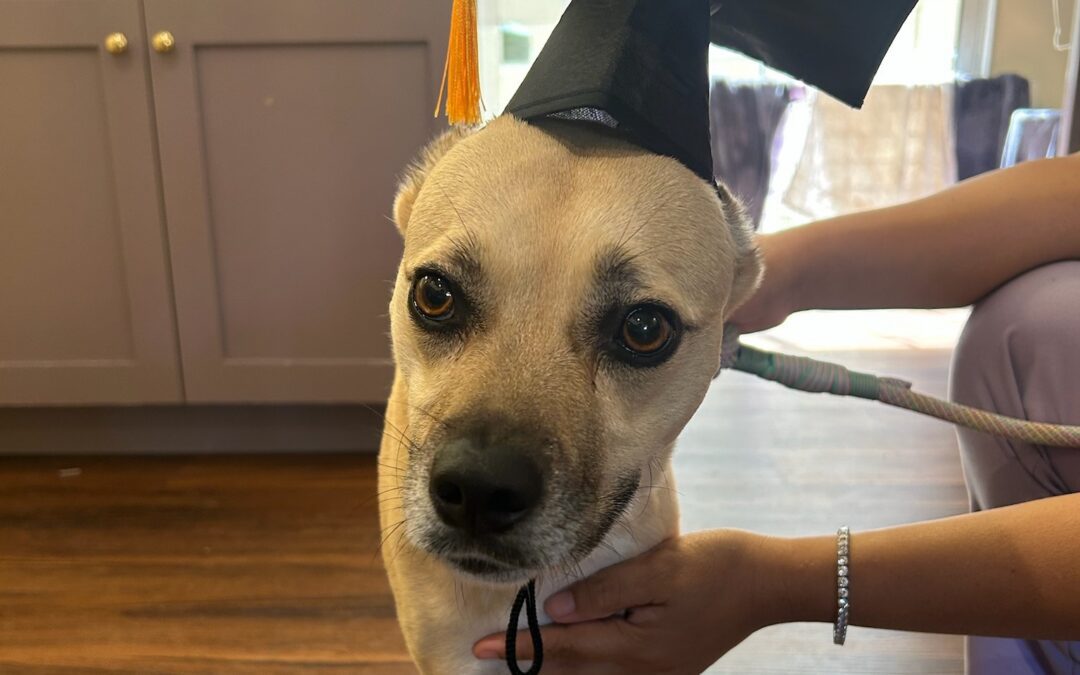
That is why the little cap gets me every time. Each pet who completes a restoration series is not just finishing a treatment. They are walking out with a foundation, a resilient inner garden that shapes digestion, immunity, skin, mood, and, as the oncology world is now confirming, so much more.
So here is my invitation to you, and I will say it plainly, because I believe it plainly. If you do one proactive thing for your pet’s health this year, let it be their microbiome. Start with testing, a simple, non invasive look at the garden they are carrying. Then, if it needs tending, restore it. Not when things fall apart. Now, while we are ahead of the story.
Your pet may never know what we prevented.
That is rather the point.
— Dr. Lily
A Note on Microbiome Testing
Curious what your pet’s inner garden looks like? Send us an email at info@integrativepet.com and ask about microbiome testing, a simple fecal sample is all it takes to start. If restoration makes sense, we will walk you through the series step by step. And we will celebrate the graduation!