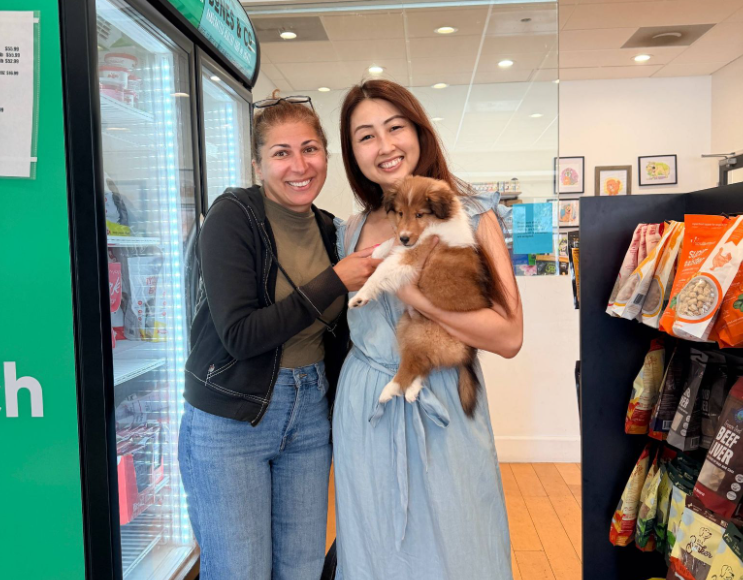
I was standing in the middle of Pawramount on Saturday holding a chew toy I wasn’t sure about.
Too hard for a puppy? Too soft, so she’d shred it in an afternoon and swallow half? I’d already been down the food aisle twice. I know what’s in these bags. I can read a guaranteed analysis faster than I can read a menu. And I was still standing there, turning a dehydrated duck feet over in my hands like it was going to tell me something.
Neda came over. She’s owned the store for years, and her own animals have been in my care for almost as long — so we know each other for quite some time.
She looked at the puppy. She looked at me.
“This is one lucky pup, to have you as her mom.”
And I heard myself say: “Honestly? I’m just figuring it out.”
She stopped. Actually stopped, mid-step, and turned around.
“You’re just figuring it out?”
I’ve been thinking about the moment.
Here’s what people might not know.
It took me six years to get here. Six years of thinking about it, and deciding I wasn’t ready, and thinking about it again. Not because I don’t know how to care for a dog — I have spent my whole career knowing how to care for dogs. But knowing how and being ready are two entirely different organs. One is in your head. The other one is not.
We picked her up on Thursday, which is also my daughter’s birthday, which means that from now on the same day on the calendar will hold two kinds of joy that I will never fully be able to separate. My daughter was luminous. I was something more complicated. Excited in a way that made my hands unsteady. Nervous in a way I did not expect and could not entirely explain to anyone in the car.
Then we got home, and she peed on everything.
Everywhere. The rug, twice. The hallway. The spot I had just cleaned, roughly ninety seconds after I cleaned it. And I stood there — a veterinarian, a person people call for advice about this exact thing — running through the list. Is it the water schedule. Is it stress. Is it the crate placement. Is it a urinary issue. Is it something I’m doing.
It was none of it. She was a baby in a brand-new house, and there was genuinely nothing to fix.
Four days in, she’s a different animal. Not because I found the answer. Because four days went by.
I want to say the thing I think Neda’s double-take was really asking about.
There’s an idea floating around that somewhere out there is a category of pet parent who has it handled. Who isn’t googling at eleven at night. Who doesn’t stand in an aisle second-guessing a chew toy. And when you’re inside your own worry, it is very easy to believe that everyone else is in that category and you are the exception.
I’m telling you as someone people assume is in that category: I’m not. There isn’t one. The expertise doesn’t remove the worry — it just gives the worry better vocabulary.
Because worry, most of the time, isn’t a sign that you’re failing. It’s love that hasn’t found a task yet. It shows up before you know what to do with it, and it looks like doubt, and it feels like inadequacy, and it is actually just the size of how much you care arriving ahead of schedule.
So — yes, I’m just figuring it out.
I think that might be the whole job.
What’s the thing you assumed every other pet parent already knew, and you were the only one still guessing at?
I’ll go first — I genuinely did not know whether to buy the chew toy. I bought it. She loves it. I still don’t know if it was the right call.
— Dr. Lily
Send us your answer at info@integrativepet.com
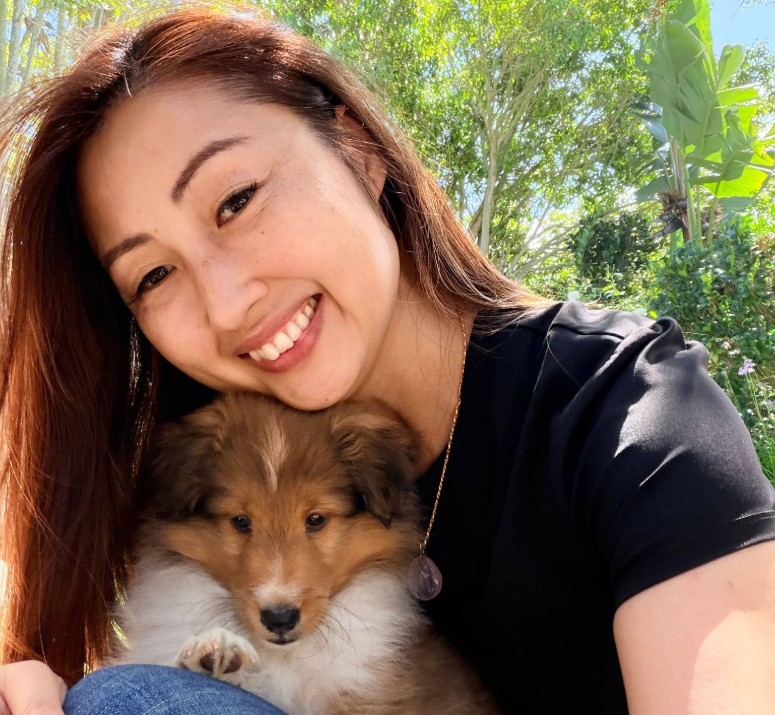
Choosing a puppy at this stage of life is very different than it was when I was 24.
I know more now. I care more about the details. I ask questions I didn’t know to ask back then. I have spent 20 years watching what happens in dogs’ bodies when the early weeks of life go beautifully — and I have spent 20 years watching what happens when they don’t.
The microbiome. The vaccination and deworming schedules. Early neurological stimulation. Whether the puppies got their mother’s colostrum in the first golden window of life. Whether they had a soft, thoughtful weaning or were dropped straight from milk to kibble at four weeks. All of it matters. All of it shapes the animal that arrives at your door on their eighth week of life.
I want to be involved in as much of it as I can. Because I know now that the first eight weeks of a puppy’s life are the foundation for everything that comes after — their temperament, their gut, their immune system, their resilience to stress. And most families never see those weeks. Never get to influence them. Never even know they are the most important part of the whole story.
I want to honor that window this time.
I also want to be honest with you about something.
People have asked me why I chose to work with a breeder for this puppy instead of adopting. And that is a longer conversation than one newsletter can hold — but the short answer is that both paths can be beautiful, and both can be right for different families. For our family, at this stage, with two growing children and the specific temperament and health considerations I am watching for as a clinician, and wanting to study the microbiome and gut health from early age, working with a truly thoughtful breeder is what feels right.
I hold no judgment either way. There are extraordinary rescue dogs waiting for homes right now, and there are extraordinary breeders quietly doing the work of raising healthy, well-socialized, deeply loved puppies. Both are true. Both matter. Both can coexist.
What I care about most is that the choice — whichever one a family makes — is made with intention, with information, and with the whole picture in view.
This week on the podcast, I sit down with Heather Gibson, the founder of Big Hearted Breeders. She is one of the most thoughtful people I have ever met in this space. Before she was a breeder, she was a foster parent for children with severe trauma for over a decade. Her path to this work began by watching her own foster children heal through their bond with animals.
We talk about what actually happens in those first eight weeks. Early neurological stimulation. Socialization. What thoughtful health testing looks like on the parents. Why colostrum is a golden window that cannot be replicated later. How to spot a breeder who is doing the work with heart versus one who is running a business. And how veterinarians and breeders — who have historically been in tension with each other — can start working together for the good of the puppy in front of them.
It is such an important conversation. And it comes at exactly the moment I needed it, personally.
I will share our new puppy with you when she arrives.
Until then — if you have ever lost a heart dog, I want you to know it is okay if it takes you longer than you thought to open your heart again. Grief has its own timing. So does love.
And when you are ready — the right dog will find their way to you.
Give your sweet ones an extra long scratch from me today. 💜
— Dr. Lily