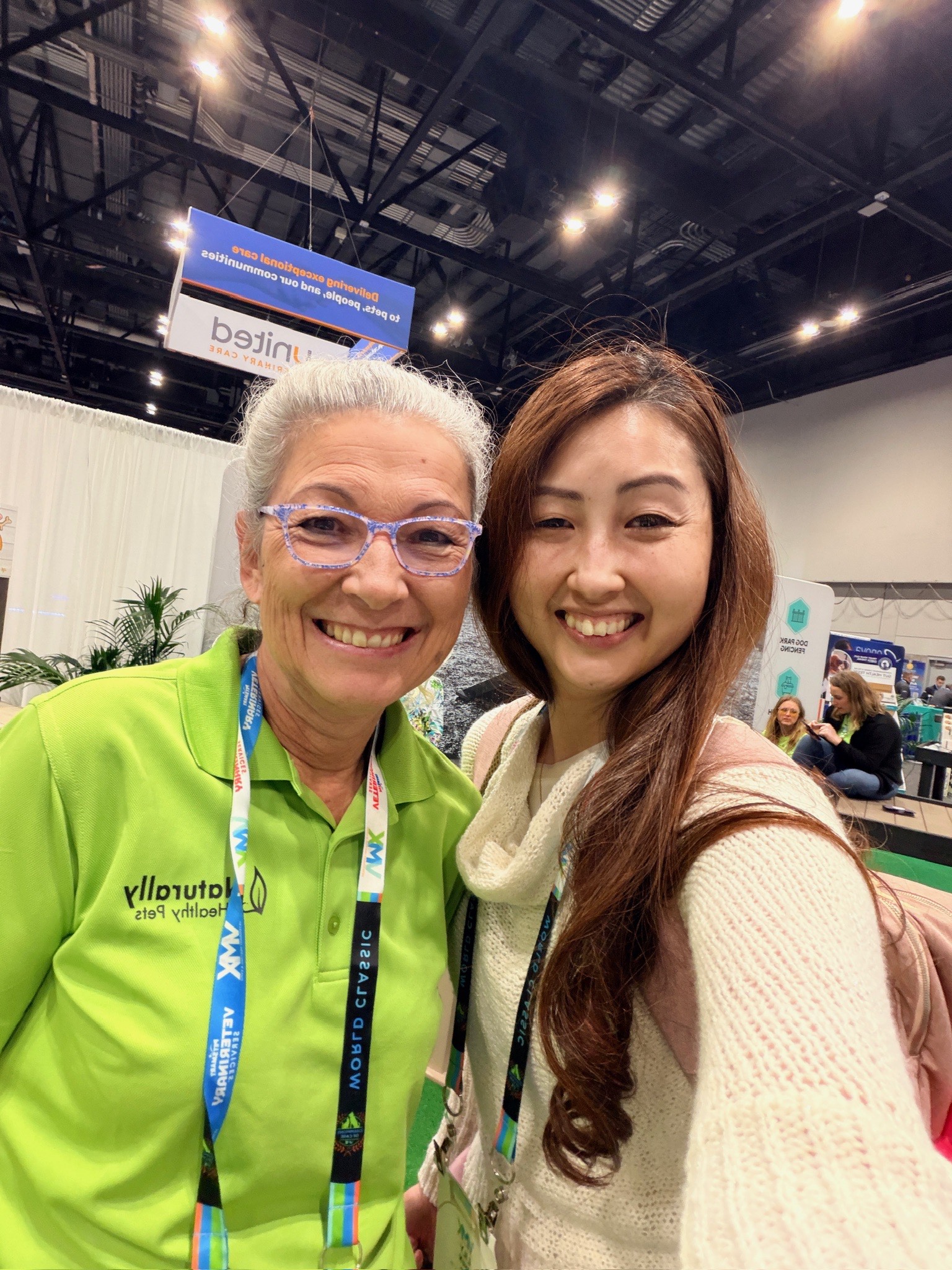

I saw Dr. Judy Morgan at VMX back in January. VMX is the biggest veterinary conference in the world — 20,000 professionals, every major pharmaceutical company, every prescription diet brand. It is, in every way, the epicenter of conventional veterinary medicine.
And there she was. One of the most influential voices in holistic veterinary medicine. A woman who has been called a quack, dismissed by colleagues, trolled online. Standing right in the middle of it. Not whispering in a corner. Just showing up.
That image has stayed with me.
Here’s my confession. I’ve wanted to be a bridge between these two worlds for a long time. And I’ve been cautious about it.
You see, I have very dear colleagues in the conventional world whose hearts are nothing but doing the best for pets. Many of them — including myself when I was in that space — were willing to break ourselves to give the best care possible. I carry all of that training with me every single day. It’s the foundation of everything I do now.
But I also can’t unsee what I’ve seen. I can’t unknow that years of symptom management without asking why often leads to bigger issues. I can’t unfeel what it’s like to watch a dog who was scheduled to be euthanized get up and walk out of my clinic after 10 minutes of acupuncture.
I didn’t abandon my conventional training. I added to it. And once you add certain things, you can’t go back to seeing it the old way.
Here’s the part that matters most to you.
There’s a divide in veterinary medicine right now. On one side — holistic medicine is dangerous. On the other — conventional medicine is poisoning your pets. And everyone claims to be practicing “the best medicine.”
But best practice isn’t a fixed point. It’s a moving conversation.
What’s best for the dog who’s been on Apoquel for two years and is still itching? Another medication? Or stepping back and asking what’s happening in the gut, the immune system, the nutrient status?
What’s best for Dr. Judy’s cat who was head pressing with sky-high eosinophils? She gave steroids immediately — because the cat needed them. Then she layered in natural anti-inflammatories and weaned off steroids faster than any conventional protocol. The cat is perfectly normal now. That’s not holistic. That’s not conventional. That’s integrated.
Best practice might look completely different depending on the pet in front of you.
I’m starting to realize that being a bridge doesn’t mean being silent. It means being honest. It means saying I use conventional drugs when a pet needs them and I also believe most chronic disease can be healed — not just managed — when we look deeper. It means trusting that you can handle the nuance. That you don’t need me to pick a side. You need me to tell you what I see.
So if your pet has been on the same medications for months and things aren’t getting better — it’s okay to ask why. Not to argue with your vet. Just to wonder out loud.
The best thing you can do for your pet is refuse to accept that there’s only one way.
This week on the podcast, I sat down with Dr. Judy Morgan and we couldn’t stop talking. Part one is out now. Part two drops next week — and we’re going places that might make you a little uncomfortable. In the best way.
I hope you’ll listen. 💜